The Cyber Youth Advisory Council — C-YAC — is the engine of the village in motion. Every student gets the baseline through their school or home. A handful, in every classroom, will want more. C-YAC is for them.
The students who learn this best are the ones who go on to teach it.
For students reading this
You already know more about how these platforms feel from the inside than most of the adults in your life. What we offer is a way to turn that fluency into a skill set, a portfolio, and — if you stay with it — a career.
C-YAC is not a club where you sit and listen to a guest speaker. It is a working council. You will teach. You will run workshops. You will host parent nights and stand in front of the parents of your school and explain — better than we ever could — what is actually on the platforms their kids use.
You will pair with cybersecurity practitioners who have done this work for a decade or more. They will treat you as a collaborator, not a student to be talked down to. The pledge that opens every C-YAC session is the same one we use in the classroom: I am a hacker — for good.
What C-YAC students actually do
- Peer-teach. A C-YAC student trained today is the volunteer expert who teaches the year-below-them next year. You will design and run sessions for younger students at your school or in your community.
- Host parent nights. Stand alongside (or instead of) the adult facilitator and show the parents of your community what the actual platforms look like — the dark patterns, the recommendation algorithms, the in-app currency loops. This is the single most powerful thing C-YAC does, because nobody else can do it.
- Build a public portfolio. Articles, talks, workshop materials you authored, demonstrations you ran. By Year 12, this is a CV that opens doors.
- Pair with volunteer specialists. Cybersecurity practitioners, designers, educators, psychologists. You bring the question, they bring the lens.
- Feed into internships. Local businesses and partner organisations offer internships to C-YAC students. Cybersecurity becomes a path, not a far-off field.
What students get from it
A portfolio of public work. A mentor or two. References that mean something. Internship pathways with local businesses. Membership in a community that takes you seriously.
And — this is the part nobody tells you about clubs — the actual skill of standing in front of a room, explaining something hard, and changing minds. That skill compounds with every workshop you run.
The pedagogy
C-YAC borrows the same pedagogy as the in-school programme: discovery before labels. You will surface the patterns of persuasive design by becoming the designers yourselves — Red Team to find the tricks, Blue Team to redesign for user respect. Vocabulary lands after evidence.
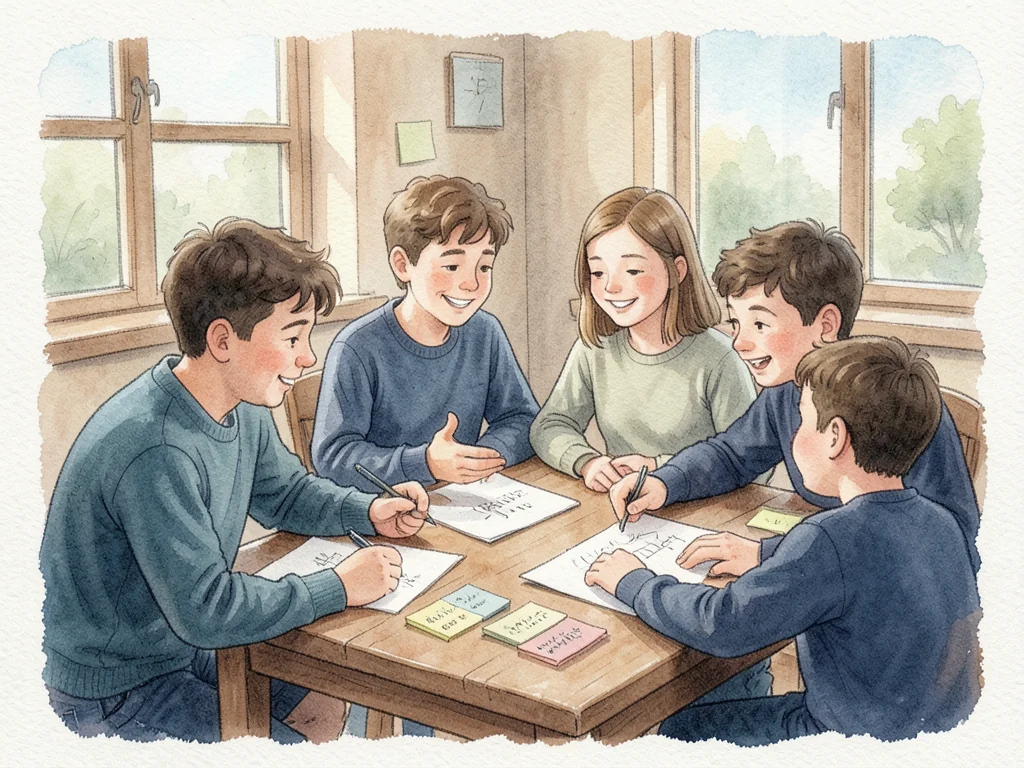
Sessions are deliberately analogue — paper and sticky notes. The medium is the message. You will not learn to defend against attention-capture design by sitting on a device.
Where chapters run
C-YAC chapters can be set up inside any community that has a critical mass of curious students aged 12–17:
- Schools — public and private, primary into secondary.
- Home-schooling co-ops, microschools, and learning pods — chapters run at the co-op or microschool level, inside your community at its own pace. See For Home-Schooling Families.
- Community youth groups — faith-community youth groups, scouts, sports clubs, community-centre teen programmes.
- Library teen programmes — increasingly, public libraries are the host venue. We are open to it.
What we look for is a host organisation that can provide the room and a designated adult to safeguard. We bring the rest.
For parents
Ages 12–17. Younger students can attend workshops and assemblies through their school; C-YAC membership starts at 12.
Time commitment. Two to four hours a month is the baseline. More if your student wants to lead a workshop, host a parent night, or take on a portfolio project — and many do, by choice.
Safeguarding. Every C-YAC session has a designated adult present. Volunteer specialists working with C-YAC are background-checked and operate under our safeguarding policy. We will share that policy with you in full before your student joins. No exceptions.
Cost. No fee to the student or family. If your community wants to host a chapter, costs are covered by the host organisation, a partner sponsor, or grant funding — never the family.
What it asks of your student. Time, voice, and the willingness to stand up in front of a room. What it gives back compounds.
For host organisations
If you run a school, co-op, microschool, youth group, or library teen programme, hosting a C-YAC chapter is straightforward.
Setup. A founding cohort of four to twelve students. A designated adult lead from your side (a teacher, a parent, a librarian). A meeting room, weekly or fortnightly, for a school year.
What we bring. Curriculum and run-of-show materials, volunteer specialists for periodic deep-dives, a safeguarding framework, and the regional C-YAC network — your students get to collaborate with their counterparts at other host organisations.
What you bring. The room, the calendar, the adult lead, and the trust your students already have in your organisation.
Funding. We work with partner organisations and grant funders to cover chapter costs at no charge to the host or the families. See For Partners for what sponsoring a chapter looks like.
How to join
Tell us in one sentence who you are — student, parent, host organisation — and where you are. We will route you to the right conversation inside a few days.
If you are a student writing on your own, please put a parent or guardian in copy. We will not begin without their involvement.
Where this leads
A C-YAC student today is the volunteer expert who teaches the year-below-them next year — and one of the cybersecurity practitioners who returns five years from now to teach the next cohort. That is the loop, and C-YAC is the engine that closes it.
The community gets safer — one family, one classroom, one chapter at a time.