You did not sign up to teach digital citizenship without help. We did. This page is the offer.
Your reality
You are asked to teach digital citizenship in a system that’s under-resourced for it.
Most schools we work with carry a mandate from somewhere — the ministry, the board, the parent association — to “do something about online safety.” Few of those mandates come with the time, the curriculum, or the specialist support teachers need to deliver them well. Teachers are stretched across subjects they were never trained to teach.
You are improvising. Your teachers are improvising. Your students are getting an inconsistent message, and you can see it in the room.
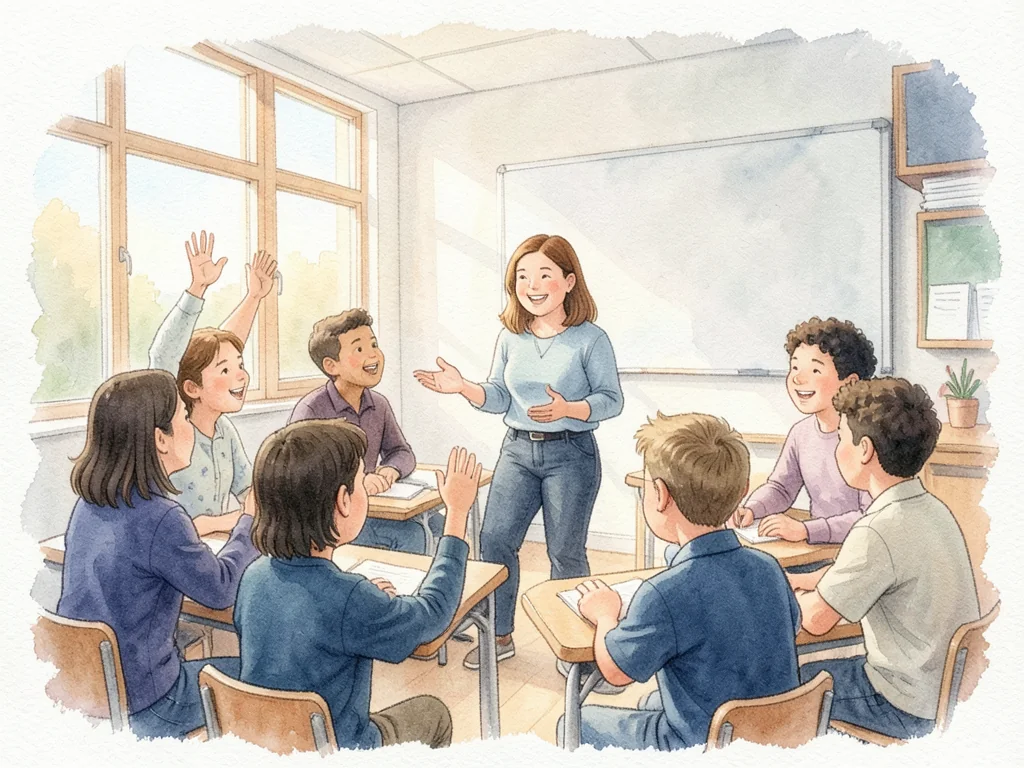
You bring the room. We bring everything else.
Curriculum, materials, volunteer specialists who do this work professionally, plus a youth-leadership pipeline most schools do not realise is available to them. You provide the calendar slot and the students. We provide the rest.
Cyber self-defense for every student
We size the format to your room. Duration, audience, and arc all tailor to what you need. The pilot below is shaped one way. The shape can be changed to suit your school — fewer sessions, different year-group, different mix of analogue and digital, different mix of student work and parent-facing work. The constant is: every student in the room, no opt-in.
Parent Workshop — Introductions
One 90-minute interactive parent workshop, attended alongside school faculty. Sets the stage for cyber self-defense and digital parenting before the student sessions begin.
Grade 10 — Attention. Privacy. Power.
Six 45-minute sessions, by design analogue. Paper and sticky notes only. No devices in the room. Students lead; teachers guide. Each session has a tangible output, and the output builds across the arc.
The pedagogy is discovery before labels. Students surface the patterns of persuasive design by becoming the designers themselves — Red Team to find the tricks, Blue Team to redesign for user respect. Vocabulary lands after evidence. Session 1 opens with the deliberate provocation “I am a hacker” and a Hack For Good Pledge that governs every subsequent session.
- Sessions 1–2 — Attention. Persuasive design from the inside.
- Sessions 3–4 — Privacy. Surveillance capitalism, the Splinternet, tabletop exercises on awareness and protection.
- Sessions 5–6 — Power. Free will in the attention economy. A Voice of Their Generation capstone.
Students leave with concrete artifacts: a personal Hook Audit on their most-used app, contributions to an anonymised Dispatches booklet (testimony from teens on what it’s actually like to be fifteen online today), and a peer-teaching lesson plan they can deliver to younger students.
Parents stay in the loop
Each session evening, parents get a one-page take-home brief: three dinner-table questions and three explicit don’t-do moves. Optional self-paced modules (under fifteen minutes each) build into a family plan reviewed by expert volunteers. The frame across every parent touchpoint is the same: this is a team sport. The kid is learning to be in control. That doesn’t work without you. And it doesn’t work if you take over.
Materials for teachers
A curriculum your teachers do not have to build.
Run-of-show documents. Speaker notes. Student handouts. Facilitator cheat sheets. Scrimmage worksheets — the kind a substitute teacher could pick up twenty minutes before class and still deliver the session well.
If you want us to come in and deliver, we will. If you want to deliver yourselves with our materials, that is the point of writing them. The choice is yours.
Then C-YAC — for the ones who want more
Every student gets the baseline. A handful, in every classroom, will want more. That’s where the Cyber Youth Advisory Council comes in — it’s how the programme scales past us.
C-YAC is a group of students aged 12–17 who train as digital protectors. They run workshops for younger students. They host parent nights — showing the parents of their school what is actually on the platforms their kids use. They model behaviour for younger kids. They build a portfolio of public work. They feed into an internship pathway with local businesses and into the village in motion — eventually, into the careers that come back to volunteer.
C-YAC isn’t a side gift to your top performers. It’s the engine. A C-YAC student trained today is the volunteer expert who teaches the year-below-them next year, and one of the cybersecurity practitioners who returns five years from now. If your school has students who want to be more than passive recipients of digital-safety messaging — who want to be the voice of their generation in shaping it — we want to talk to them. See the C-YAC page for what membership looks like and how to start a chapter.
For home-schooling and microschool communities, C-YAC chapters can be set up at the co-op or microschool level — run inside your community at its own pace. See For Home-Schooling Families for that conversation.
Get in touch
We respond personally. No ticket queue. Tell us roughly: which year group, which format, which topic, what dates work for you. We come back inside a few days with options.
If you are already partnering with an ISP, a community group, or another organisation that supports student safety initiatives — we can usually co-deliver and amplify each other’s reach. See for partners for that conversation.
What this can grow into
A school where students do not just receive the digital-safety messaging — they shape it for their peers.
Picture a parent night at your school where the students are running the demonstrations. Picture a year-9 assembly where a year-12 student is leading the room. Picture a graduating cohort that leaves with cybersecurity portfolio pieces on their CVs.
That is what the partnership can look like in three years. We are happy to start small — one workshop, one room, one teacher. The bigger thing grows from that.